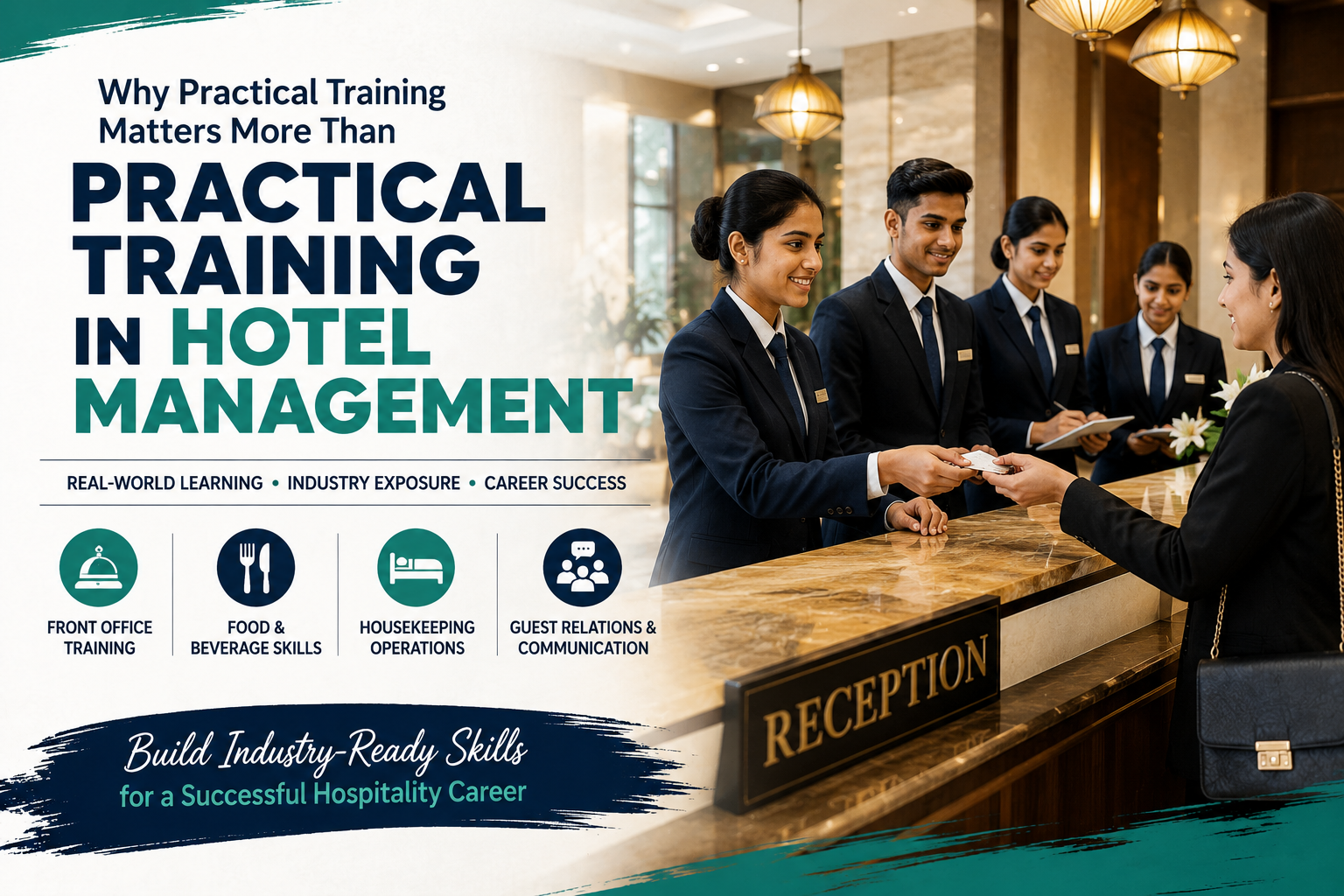
Why Practical Training Matters More Than Classroom Learning in Hotel Management
The hospitality industry is built on service excellence, professionalism, and guest satisfaction. While classroom learning provides the theoretical foundation of hospitality operations, practical training is what truly prepares students for successful careers in hotels, resorts, restaurants, airlines, and cruise lines.
For students planning to pursue a Hotel Management Course after 12th, understanding the importance of practical exposure can help them make informed decisions about their education and future careers. At ASHCM, hospitality education goes beyond textbooks by focusing on industry-oriented learning and hands-on skill development.
Why Practical Training Matters
Hospitality employers value practical skills because real-world experience prepares students for professional success.
Industry-Ready Skills
Develop operational skills that hospitality employers actively seek.
Professional Confidence
Gain confidence by working in practical hospitality environments.
Communication Excellence
Improve guest interaction, teamwork and customer service abilities.
Better Career Opportunities
Hands-on experience helps students stand out during placements and interviews.
1000+
Hospitality Brands
Hotels, resorts, restaurants and luxury hospitality companies continuously seek trained professionals.
80%
Practical Learning
Most hospitality skills are developed through hands-on training, industry exposure and real-world practice.
Global
Career Opportunities
Build careers in hotels, airlines, tourism, cruise ships and international hospitality organizations.
The Hospitality Industry Requires More Than Theory
Unlike many professions where work is primarily office-based, hospitality professionals interact directly with guests every day. They are expected to deliver exceptional service, handle customer concerns, maintain professional standards, and contribute to memorable guest experiences.
While textbooks can explain hospitality concepts, students truly understand these responsibilities when they experience real hospitality environments through practical training sessions and industry exposure.
Employers often look for candidates who can confidently handle:
- Front Office Operations
- Guest Relations
- Food & Beverage Service
- Housekeeping Management
- Hospitality Communication
- Customer Service Excellence
- Team Coordination
- Problem Solving
Understanding the Role of Practical Training
Practical training bridges the gap between classroom education and professional employment. It allows students to apply theoretical concepts in real-world situations and gain confidence in handling hospitality operations.
Hospitality education becomes more effective when students are exposed to operational environments where they can understand industry standards, workplace expectations, and customer service requirements.
Practical learning also helps students identify their strengths and interests within different hospitality departments, enabling them to make better career decisions.
How Practical Training Builds Industry-Ready Professionals
Hospitality employers prefer candidates who can contribute immediately to guest satisfaction and operational efficiency. Practical training develops workplace readiness by teaching students how hospitality departments function in real situations.
- Improves confidence and professionalism
- Develops decision-making skills
- Enhances workplace adaptability
- Strengthens customer service abilities
- Prepares students for internships and placements
Front Office Training: The Face of Hospitality
The front office is often the first point of contact for guests. Hospitality professionals working in this department play a crucial role in creating positive first impressions.
Through practical training, students learn:
- Guest check-in and check-out procedures
- Reservation management
- Professional communication techniques
- Guest complaint handling
- Customer service standards
Food and Beverage Service Skills
Food and beverage operations are among the largest departments within the hospitality industry. Whether working in hotels, restaurants, resorts, or cruise ships, hospitality professionals must understand service standards and guest expectations.
- Service etiquette
- Restaurant operations knowledge
- Teamwork skills
- Time management
- Customer interaction abilities
Housekeeping: The Backbone of Hospitality Operations
Housekeeping plays a critical role in guest satisfaction. Cleanliness, presentation, and comfort directly influence a guest's overall experience.
Practical housekeeping training helps students understand:
- Room preparation standards
- Hygiene and sanitation practices
- Quality control procedures
- Guest comfort requirements
- Operational efficiency
Communication Skills: A Critical Hospitality Requirement
One of the most important skills in hospitality is communication. Guests come from different regions, cultures, and backgrounds, making effective communication essential.
- Verbal communication
- Professional etiquette
- Guest interaction skills
- Public communication confidence
- Conflict resolution techniques
Why Industry Exposure Gives Students an Advantage
The hospitality sector is highly competitive. Employers prefer candidates who understand workplace expectations and can adapt quickly to operational environments.
- Understanding professional standards
- Workplace discipline
- Increased confidence
- Better adaptability
- Practical career insights
Growing Opportunities in Cruise Hospitality
The cruise industry is one of the fastest-growing segments of global hospitality. Modern cruise ships require trained professionals across multiple hospitality departments.
- Guest Services
- Food & Beverage Operations
- Housekeeping Services
- Customer Experience Management
- Hospitality Administration
Why Students Choose ASHCM
ASHCM focuses on developing industry-ready hospitality professionals through a combination of academic learning, practical exposure, and skill development.
- Industry-Focused Learning
- Practical Skill Development
- Professional Communication Training
- Hospitality-Oriented Education
- Career-Focused Guidance
Ready to Build a Successful Hospitality Career?
Explore Hotel Management, Hospitality Management, and Cruise Management programs at ASHCM and gain the practical skills employers value most.
Enquire About Admissions 2026Key Takeaways
- Practical training is essential for success in hospitality careers.
- Industry exposure helps students develop confidence and professionalism.
- Front office, food & beverage, and housekeeping skills are critical hospitality competencies.
- Communication and customer service skills play a major role in career growth.
- Hospitality employers value candidates with practical experience.
- ASHCM emphasizes industry-oriented learning and skill development.
Conclusion
Success in hospitality is built on experience, professionalism, adaptability, and a commitment to excellent service. While classroom education provides essential knowledge, practical training helps students develop the confidence and industry skills required to succeed in real hospitality environments.
For students planning a future in hotels, resorts, tourism, restaurants, airlines, or cruise hospitality, choosing an education that combines theoretical learning with practical exposure can make a significant difference in long-term career growth.
As the hospitality industry continues to evolve, professionals with strong practical skills will remain in high demand across India and the global hospitality sector.